Signs of ADHD in Kids: What Every Parent Should Know
By Stephanie Laborge, R. Psych - Owner, Launch Psychology
Parents often come into my office unsure whether what they’re seeing at home is ‘typical kid stuff’ or something more. The constant motion. The forgotten backpack (or jacket, shoes, lunch). The impulsive choices that come out of nowhere and disrupt the family flow. ADHD doesn’t always look the way people picture it. Some kids bounce off the walls. Some daydream through math class. Plenty are bright, capable, and still struggling underneath. As a Registered Psychologist in Calgary, I have this conversation often! Here’s what I tell parents to watch for.
What ADHD Actually Is
ADHD has nothing to do with your child’s effort or intelligence, or your parenting. It’s a neurodevelopmental difference in how the brain manages attention, activity level, and impulse control. Current criteria recognize three presentations: Predominantly Inattentive, Predominantly Hyperactive/Impulsive, and Combined. The signs of ADHD in kids look pretty different from one type to another (even within the same family).
Signs of ADHD in Kids: Inattention
These signs get missed most often, especially in girls and in children who appear as “good students” (“angel to have in class!”) while struggling underneath:
Careless mistakes on schoolwork even when your child clearly knows the material
Difficulty sustaining attention during tasks, conversations, or play
Appearing not to listen when spoken to directly
Trouble following multi-step instructions or finishing what they start
Forgotten backpacks, lost permission slips, chronic disorganization
Avoiding tasks that take sustained mental effort
Losing things repeatedly
Easy distractibility, including from their own thoughts
Teachers often describe these kids as “bright but inconsistent.” That gap between what your child can clearly do and what shows up on paper can be one of the most reliable signs of ADHD in kids.
Signs of ADHD in Kids: Hyperactivity
This is the picture most people have in their minds when they picture ADHD (especially if you grew up in the 80s or 90s) - children in constant motion:
Fidgeting or constant small movements
Difficulty staying seated in class or at the dinner table
Running or climbing when it isn’t appropriate
Trouble playing quietly
Often “on the go,” as if motorized
Talking a lot, sometimes nonstop
A four-year old climbing the furniture is most likely being four! A ten-year old who cannot make it through dinner without bouncing in their chair, leaving their seat (“I just need to show you something!”), or even falling out of their seat, is likely something more.
Signs of ADHD in Kids: Impulsivity
These signs tend to be the ones that have the greatest cost to our children socially:
Blurting out answers before questions are finished
Difficulty waiting for a turn
Interrupting other people’s conversations or games
Acting before considering safety or consequences
Emotional reactions that feel bigger than the moment calls for
Parents often tell me they know their child knows better, they’ve tried all kinds of consequences, bribes, threats, and still he/she does the impulsive thing anyway. Your child’s gap between knowing what they are supposed to be doing (or not doing), and actually doing the thing, is simply their brain moving way too fast and not having the ability to pump those brakes.
Signs of ADHD in Kids at Different Ages
ADHD isn’t caused by screens (although some of the signs overlap!), poor parenting, or bad behaviour - it’s there from early childhood, and shows up differently as your child grows and develops. In preschool, it may have looked like constant motion, BIG emotional reactions, hard transitions, and more trouble waiting their turn than their peers. In early elementary, it may look like trouble starting and finishing seat work, needing a lot of prompting and one-on-one attention from adults to stay on track, forgetting what was asked of them immediately after then leave the room, disorganized chaos. Preteens often shift their hyperactivity inwards, and may experience mental busyness, difficulty resting their minds at night, and experience greater executive functioning issues. This is where a lot of girls finally get identified. And, in teens this may look like procrastination, constantly missed deadlines, big emotional swings, and greater risk-taking.
What Can Look Like ADHD (But Isn’t!)
A lot of the signs of ADHD in kids overlap with other things, like anxiety, sleep deprivation, learning disabilities, autism, vision or hearing issues, significant stress and even giftedness. This is where it becomes really important to engage in a thorough assessment, to rule out/in anything else that could be contributing to what you are seeing in your child.
When to Consider an Assessment
You don’t need to be sure it’s ADHD before reaching out. If something is making your child’s life seem harder than it should be, that’s reason enough! Specific signals that are usually worth acting on:
Concerns from a teacher (or several) across more than one school year
A widening gap between what your child seems capable of and what’s actually showing up
Daily routines that feel disproportionately hard for everyone
Your child starting to call themselves “dumb,” “lazy,” or “bad”. Negative self-talk is one of the things we really want to catch early
Sibling or peer relationships strained by impulsivity or big emotional reactions
How We Assess for ADHD at Launch Psychology
Our psychoeducational assessments are built to answer your questions: what is going on, why, and what will help. For ADHD, this may include developmental and educational history, cognitive (IQ) testing, academic achievement testing, behaviour rating scales from parents and teachers, direct observations, and clinical interviews, along with screening for co-occurring concerns like anxiety, learning disabilities, and autism.
A Final Thought…
The children I work with who have ADHD are often some of the most creative, energetic and passionate children I meet! Understanding how their brains work will allow them to rise to their fullest potential, and restore peace and harmony within your home.
If you are in the Calgary area and what to talk about an ADHD assessment for your child, our team is happy to help. Feel free to contact us for a free, 10-minute consultation to see if assessment is right for your child.
How do I prepare my child for a gifted assessment?
A gifted assessment looks at how your child’s brain works, not what they have learned or know (not like a quiz at school!) Getting ready for the assessment is all about keeping things chill and familiar.
This is a question we get often! We promise, a gifted assessment is way less scary than it sounds. Our goal is to treat it as a fun adventure, mixing playful games and puzzles with friendly chats about their favourite things, alongside the official tasks to see more about how their brain works. We also gather information from you and, if helpful, their teacher through a few simple questionnaires, because you notice things at home and in the classroom that we won’t see in our office.
A gifted assessment looks at how your child’s brain works, not what they have learned or know (not like a quiz at school!) Getting ready for the assessment is all about keeping things chill and familiar. Telling your child, “We’re going to play games and puzzles with some really nice grownups” goes a lot further than words like “test”. Stick to your usual bedtime and breakfast routine, pack a comfort item like a beloved small toy or a fun fidget, and squeeze in a few quick, playful pattern or memory games at home to help your child feel like it’s all just part of the usual fun. Parents ask us all the time if there is anything their child needs to do to prepare, and the answer is…no, not really!
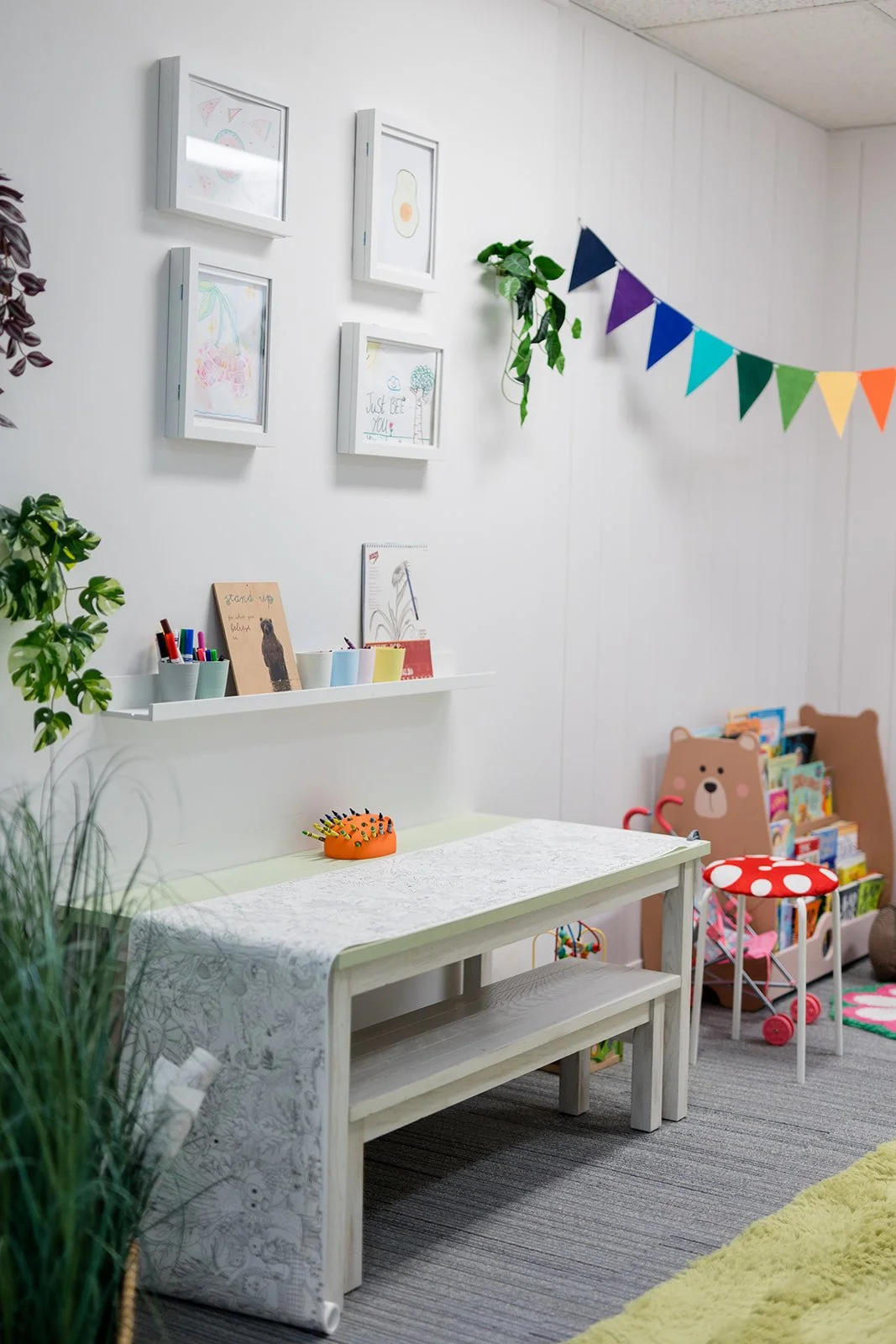
We suggest arriving a bit early if you can to find a parking spot, take a walk through our atrium, and allow your child to relax and have fun in our playroom (while you grab a free coffee and snack!) parking, so there’s no rush and your little one can get comfortable in our space. On the big day, we’ll start with a warm meet‑and‑greet, chat about their favourite things and what makes them smile, before diving into short, game-style tasks that include wiggle breaks and snacks to keep energy high. Parents join us for a debrief at the end, where we’ll share results and answer your questions. Afterward, we’ll craft a clear, parent and school-friendly report that highlights your child’s exceptional strengths, notes any areas where a little extra support could help, and offers practical strategies you can share with teachers.
Ready to uncover your child’s unique learning profile and help them soar? Drop us a line at info@launchpsychology.com, give us a ring, or click here to go to our booking page! We can’t wait to meet your little one and launch on this exciting journey together!