
Autism Assessments in Calgary
Comprehensive autism evaluations using gold-standard assessment tools (ADOS-2 and ADI-R) to provide clarity, understanding, and a path forward for your family.
If you're concerned that your child may be on the autism spectrum, a comprehensive assessment can provide the answers you need. At Launch Psychology, Stephanie Laborge uses evidence-based diagnostic tools to conduct thorough, compassionate autism assessments.
Stephanie is certified in the Autism Diagnostic Observation Schedule (ADOS-2) and the Autism Diagnostic Interview-Revised (ADI-R) - the gold-standard tools for autism assessment recognized worldwide.
Understanding Autism Spectrum Disorder
Autism Spectrum Disorder (ASD) is a neurodevelopmental condition that affects how a person communicates, interacts with others, learns, and behaves. It's called a "spectrum" because autism presents differently in every individual—some children need significant support, while others need less.
Autism is not a disease or something to "cure." It's a different way of experiencing and interacting with the world. Early identification and appropriate support can make a tremendous difference in helping autistic children thrive.
AUTISM IS CHARACTERIZED BY:
Social Communication Differences:
Difficulty with back-and-forth conversation
Challenges understanding or using nonverbal communication (eye contact, gestures, facial expressions)
Difficulty developing and maintaining friendships
Reduced interest in sharing interests or experiences with others
Restricted and Repetitive Behaviors:
Repetitive movements or speech (hand flapping, echolalia, repeating phrases)
Insistence on sameness and routines (distress with changes)
Highly restricted or intense interests
Unusual sensory responses (sensitivity to sounds, textures, lights; seeking certain sensory input)
AUTISM EXISTS ON A SPECTRUM:
Level 1 (Requiring Support): Noticeable challenges with social communication and flexibility, but able to function with some support.
Level 2 (Requiring Substantial Support): Marked difficulties with social communication and inflexibility that interfere with functioning; requires more significant support.
Level 3 (Requiring Very Substantial Support): Severe difficulties with social communication and extreme inflexibility; requires very substantial support with daily living.
Important: Every child is unique. Assessment helps identify your child's specific strengths and challenges to guide appropriate support.
Early assessment doesn't change who your child is - it provides clarity so you can access the right support and celebrate their unique strengths.

Signs You May Be Noticing in Your Child
Every child develops differently, but if you're noticing several of these signs, an autism assessment can provide clarity. Early identification leads to early support.

IN TODDLERS & PRESCHOOLERS
(Ages 1-5):
Social & Communication:
Limited or no eye contact
Doesn't respond to their name by 12 months
Limited or absent pointing to show interest
Doesn't engage in pretend play
Prefers to play alone; limited interest in other children
Delayed speech or unusual speech patterns (echolalia, scripting)
Behaviors & Interests:
Repetitive movements (hand flapping, spinning, rocking)
Lines up toys or objects rather than playing with them
Strong attachment to specific routines; distress with changes
Intense focus on specific objects or topics
Unusual sensory responses (covers ears, avoids certain textures)

IN SCHOOL-AGE CHILDREN (Ages 6-12):
Social Challenges:
Difficulty making or keeping friends
Trouble understanding social cues (body language, tone of voice)
One-sided conversations; talks at length about favorite topics
Difficulty understanding others' perspectives or feelings
Prefers solitary activities over group play
Communication Patterns:
Very literal understanding of language (misses jokes, sarcasm)
Difficulty with back-and-forth conversation
Repeats words or phrases from TV shows, movies, or others
Unusual tone of voice (too loud, too soft, monotone, or "robotic")
Behaviors:
Strong need for routines and sameness
Repetitive behaviors or rituals
Intense, focused interests (knows everything about trains, dinosaurs, etc.)
Sensory sensitivities (bothered by tags, loud noises, bright lights)
Difficulty with transitions or changes in plans
If you're noticing several of these signs and they're interfering with your child's daily life, friendships, or learning - an assessment can provide answers and open doors to support.

IN TEENS (Ages 13+):
Significant difficulty with peer relationships
Challenges understanding unwritten social rules
Anxiety in social situations
Strong preference for routines and predictability
Intense special interests
Difficulty with executive functioning (organization, planning, flexibility)
May have received other diagnoses (anxiety, ADHD, OCD) but something still doesn't fit
Our Comprehensive Assessment Process
At Launch Psychology, we use the most rigorous, evidence-based tools available for autism assessment. Stephanie Laborge is certified in both the ADOS-2 and ADI-R (the gold-standard assessments recognized worldwide).
THE GOLD-STANDARD TOOLS:

COMPREHENSIVE EVALUATION INCLUDES:
ADOS-2 (Autism Diagnostic Observation Schedule, Second Edition):
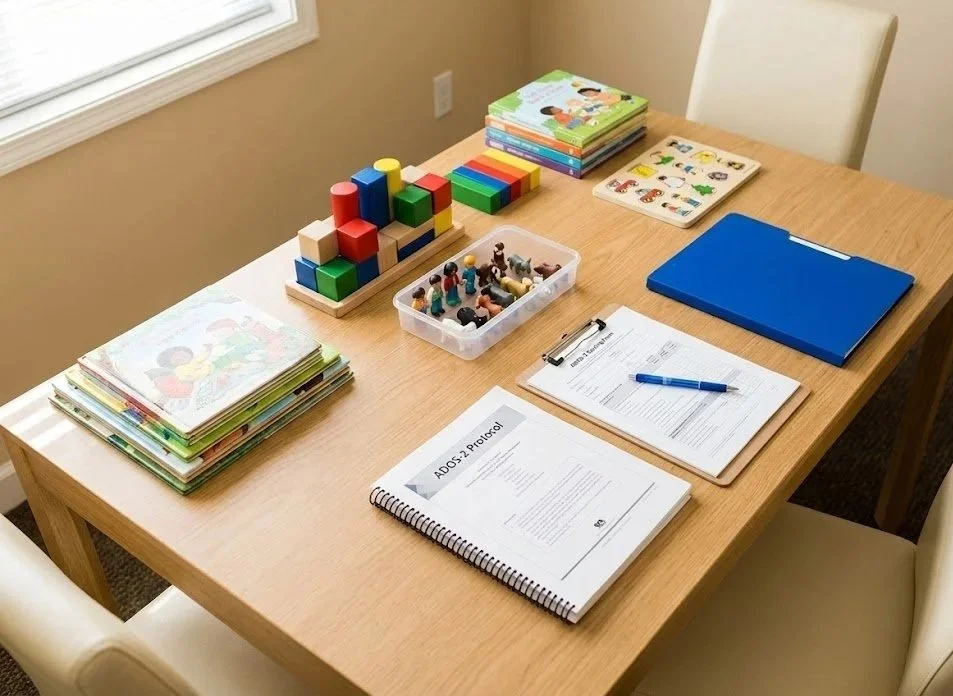
The ADOS-2 is a standardized, semi-structured assessment where the psychologist observes your child's social interaction, communication, play, and behavior through a series of activities. It's considered the "gold standard" for autism diagnosis.
What it involves:
One-on-one structured activities and play
Observation of social communication, reciprocal interaction, and play
Assessment takes 45-60 minutes depending on child's age and language level
Different modules for different ages and language abilities
Provides standardized scores for diagnostic clarity
Why ADOS-2 matters: The ADOS-2 is the most widely used and researched tool for autism assessment. It provides objective, standardized observations that are critical for accurate diagnosis.
ADI-R (Autism Diagnostic Interview-Revised):
The ADI-R is an in-depth, structured interview with parents/caregivers about the child's developmental history and current behaviors. It covers early development, communication, social interaction, and restricted/repetitive behaviors.
What it involves:
1.5-2 hour interview with parent/caregiver (without child present)
Questions about your child's developmental history
Discussion of current behaviors and challenges
Provides standardized scores aligned with diagnostic criteria
Why ADI-R matters: Parents know their child best. The ADI-R captures detailed information about behaviors across different settings and over time. This includes information that can't be observed in a single assessment session.
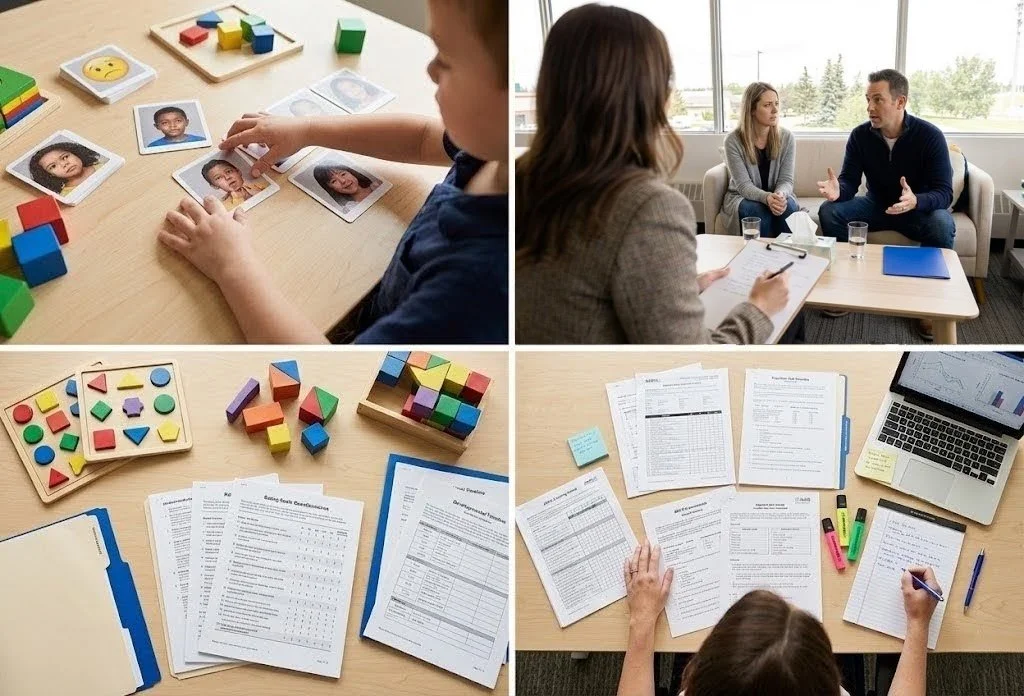
ADOS-2 (direct observation of child)
ADI-R (parent interview)
Cognitive/intellectual assessment (to understand learning profile)
Adaptive behavior assessment (daily living skills)
Review of developmental, medical, and educational history
Rating scales and questionnaires (from parents and teachers if applicable)
Clinical observation and judgment
This multi-method approach ensures accurate, comprehensive diagnosis.

“Stephanie’s ADOS-2 and ADI-R certification ensures your child receives the most thorough, accurate autism assessment available. This provides the clarity and answers your family needs.”
Specialized Certification Makes the Difference
THE PROBLEM:
Not all autism assessments are equal. Many psychologists offer autism evaluations without specialized training in the gold-standard tools (ADOS-2 and ADI-R). Without proper certification, assessments may rely on:
Clinical observation alone (subjective)
Rating scales only (limited information)
Non-standardized interviews (inconsistent)
This can lead to missed diagnoses, misdiagnoses, or unclear results.
THE SOLUTION:
Stephanie Laborge is certified in both ADOS-2 and ADI-R (the most rigorous, evidence-based autism assessment tools available). This specialized training ensures:
✓ Standardized assessment using internationally recognized protocols
✓ Objective scoring that aligns with diagnostic criteria
✓ Comprehensive evaluation that captures the full picture
✓ Accurate diagnosis backed by gold-standard research
✓ Detailed results that guide treatment and support planning
Why Stephanie's ADOS-2 and ADI-R Training Matters
STEPHANIE'S QUALIFICATIONS:
Registered Psychologist with College of Alberta Psychologists (#5210)
ADOS-2 Certified (Autism Diagnostic Observation Schedule, 2nd Edition)
ADI-R Certified (Autism Diagnostic Interview-Revised)
Master of Education in School and Applied Child Psychology, University of Calgary
10+ years conducting psychological assessments with children and adolescents
WHAT THIS MEANS FOR YOUR FAMILY:
When you choose Launch Psychology for autism assessment, you're working with a psychologist who:
Has completed intensive training in gold-standard assessment tools
Follows evidence-based diagnostic protocols
Can provide accurate, reliable diagnoses
Understands the nuances of autism presentation across ages
Collaborates with parents as partners in understanding their child
What to Expect: The Assessment Journey
Our autism assessment process is thorough, collaborative, and designed to provide comprehensive answers. Here's exactly what to expect:
The Autism Assessment Process
A comprehensive, gold-standard evaluation using the ADOS-2 and ADI-R. Here's what to expect at each step of the journey.
Initial Consultation
We discuss your concerns, your child's developmental history, and whether autism assessment is appropriate. This helps ensure the assessment will be helpful for your family.
No pressure. Just clarity about the process.
Intake Session
- Review of developmental history (pregnancy, birth, early milestones)
- Discussion of current concerns and behaviors
- Medical, educational, and family history
- Completion of background questionnaires
- Planning for assessment sessions
This session lays the foundation for comprehensive evaluation.
ADI-R Interview
- Structured interview about your child's development and behavior
- Questions about communication, social interaction, play, and routines
- Discussion of behaviors across different settings and over time
- Provides critical information that complements direct observation
This is your opportunity to share your deep knowledge of your child.
ADOS-2 Assessment
- One-on-one structured activities and play with Stephanie
- Observation of social communication, interaction, and play
- Age-appropriate module selected based on child's language level
- Child-friendly activities (not stressful or overwhelming)
Most children find the ADOS-2 engaging and enjoyable. It feels like play!
Cognitive & Adaptive Assessment
- Cognitive/intellectual assessment (understanding learning strengths)
- Adaptive behavior assessment (daily living skills)
- Additional observations of behavior and interaction
- Breaks provided as needed
These assessments help us understand your child's full profile.
Scoring, Analysis & Report Writing
- Stephanie scores all assessments
- Analyzes results in context of diagnostic criteria
- Integrates information from all sources
- Writes comprehensive report (typically 15-25 pages)
You don't see Stephanie during this time, but extensive work is happening behind the scenes.
Feedback Session
- Review of all assessment results
- Discussion of diagnosis (or why diagnostic criteria are/aren't met)
- Explanation of your child's strengths and challenges
- Recommendations for support, services, and next steps
- Opportunity to ask questions
You'll receive the full written report and leave with clear understanding and direction.
“The comprehensive process ensures we don’t miss anything. Parents tell us they appreciate the thoroughness. It provides confidence in the results and clarity about next steps.”
What Happens After the Assessment
The assessment provides clarity, but that's just the beginning. Here's what happens next and how the diagnosis can help your family:
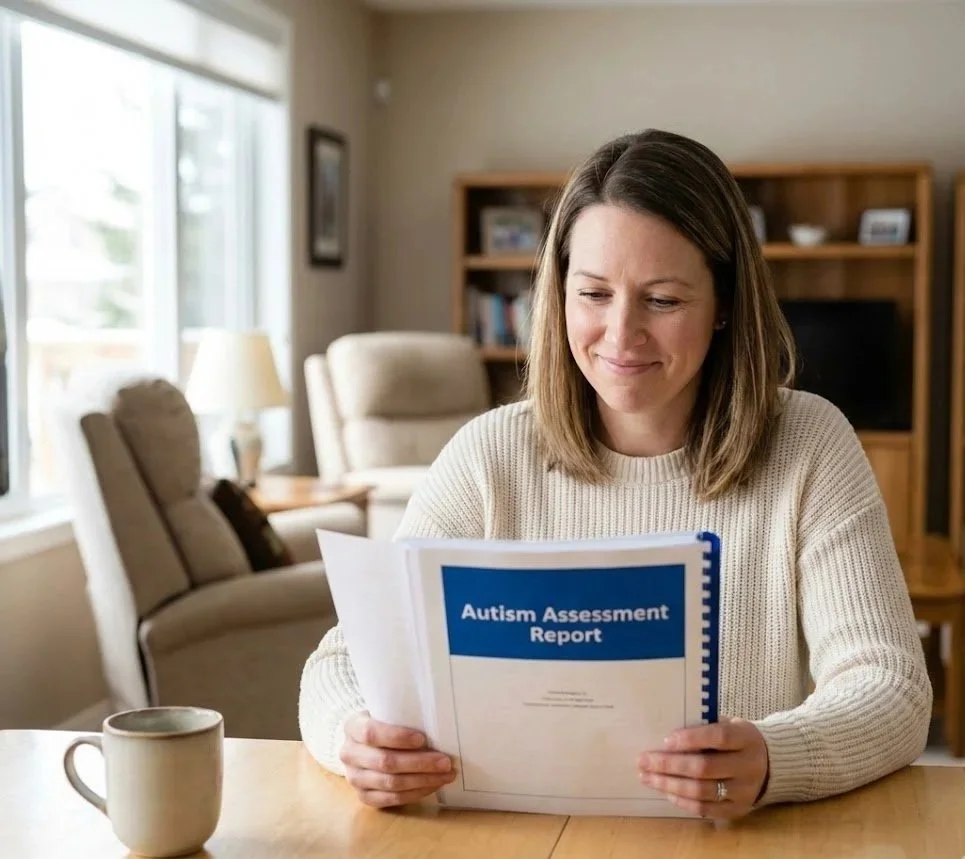
YOU'LL RECEIVE:
Comprehensive Written Report:
Detailed 15-25 page report
Summary of all assessment results
Diagnosis (if criteria are met)
Explanation of your child's unique profile
Specific recommendations for:
School accommodations and support
Therapies and interventions
Strategies for home
Community resources
The report is yours to keep and share with schools, therapists, doctors, and support services.
IF YOUR CHILD RECEIVES AN AUTISM DIAGNOSIS:
Access to Support Services:
Publicly-funded autism therapy programs (Alberta)
School-based supports and accommodations (IEP/IPP)
Specialized therapies (speech therapy, occupational therapy, ABA if appropriate)
Social skills groups
Family support programs
Clarity and Understanding:
Understanding why certain behaviors occur
Learning how to support your child effectively
Connecting with the autism community
Celebrating your child's unique strengths
Planning for the Future:
Informed decisions about education
Transition planning for adolescence and adulthood
Access to long-term support services
IF YOUR CHILD DOES NOT MEET CRITERIA FOR AUTISM:
That's valuable information too.
We'll identify what IS contributing to the challenges
Provide alternative explanations (ADHD, anxiety, language disorder, etc.)
Recommend appropriate supports and next steps
Rule out autism so you can focus on the right interventions
Either way, you'll leave with answers, clarity, and a path forward.
Assessment isn't the end. It's the beginning of understanding your child and accessing the right support. The diagnosis (or clarity that it's not autism) empowers you to help your child thrive.
Your Questions About Autism Assessment, Answered
-
Autism can be reliably diagnosed as young as 18-24 months, though some children aren't identified until later (school age or even adolescence).
The ADOS-2 has modules for:
Toddlers (12-30 months with minimal language)
Young children (30 months+ with phrase speech)
Children and adolescents with fluent speech
Older children, adolescents, and adults
If you have concerns, it's never too early or too late to seek assessment.
-
Most children actually enjoy the ADOS-2! It involves play-based activities that feel natural and engaging. We take breaks as needed, and the assessment is conducted at your child's pace.
The ADOS-2 is designed to be interesting and fun for children. They typically don't even realize they're being "assessed." They're just playing and interacting.
-
We're experienced in working with children who are anxious, shy, or have difficulty engaging. How your child responds is actually part of the observation. There are no "wrong" answers or behaviors.
If your child truly can't participate in a particular session, we'll reschedule or adjust our approach. Our goal is to see your child at their best while also observing their challenges.
-
Yes. The comprehensive assessment includes cognitive testing and behavioral observations that can identify:
ADHD
Anxiety disorders
Learning disabilities
Language disorders
Intellectual disability
Sometimes children have autism AND another condition (e.g., autism + ADHD). We assess the full picture.
-
We don't provide the diagnosis immediately after testing. Stephanie needs time to score all assessments, analyze results, and integrate information before reaching diagnostic conclusions.
You'll receive the diagnosis during the feedback session, where we can discuss it thoroughly and answer all your questions. This typically occurs 3-4 weeks after testing is complete.
-
We encourage you to ask questions and share concerns during the feedback session. Stephanie will explain exactly how she arrived at the diagnosis based on standardized scores and diagnostic criteria.
If you have doubts, we can discuss them openly. You're always welcome to seek a second opinion. A good assessment should be able to stand up to scrutiny.
-
Yes. Some families seek a comprehensive ADOS-2/ADI-R assessment for confirmation, especially if the original diagnosis was based on limited information or wasn't conducted using gold-standard tools.
We can provide a thorough re-evaluation to either confirm the diagnosis or provide additional clarity.
-
Most extended health plans in Alberta cover psychological assessments provided by a Registered Psychologist. Check your plan's:
Annual maximum for psychology services
Coverage percentage
Whether pre-authorization is required
We offer direct billing for many insurance plans. You'll pay the psychologist's fee ($240 per hour), and the assessment typically takes 8-10 hours of psychologist time.
-
Psychoeducational assessment focuses on learning, academic skills, and cognitive abilities. It's designed to identify learning disabilities and guide educational support.
Autism assessment focuses on social communication, behavior, and development. It uses specialized tools (ADOS-2, ADI-R) to diagnose autism spectrum disorder.
Some children need both assessments: one to understand learning needs, another to assess for autism. We can discuss what's most appropriate for your child.
Investment in Understanding Your Child
ASSESSMENT COMPONENTS:
Intake Session (60-90 minutes): $240-$360
ADI-R Interview (90-120 minutes): $360-$480
ADOS-2 Assessment (45-90 minutes): $180-$360
Cognitive & Adaptive Testing (2-3 hours): $480-$720
Scoring, Analysis & Report Writing (6-8 hours): $1,440-$1,920
Feedback Session (60-90 minutes): $240-$360
TOTAL INVESTMENT:
Comprehensive Autism Assessment: $2,880 - $4,200
Exact cost depends on child's age, complexity, and testing time required.
Average assessment: $3,200 - $3,600
INSURANCE COVERAGE:
Direct Billing Available: We offer direct billing for most major insurance plans in Alberta, including:
Alberta Blue Cross
Green Shield
Manulife
Sun Life
And many more
Important:
Check your plan's annual maximum for psychology services
Most extended health plans cover Registered Psychologist assessments
Autism assessments are typically covered the same as other psychological assessments
Some plans may have session limits
PAYMENT OPTIONS:
Pay per session as you go
Payment plans available (discuss during intake)
Direct insurance billing available
Credit card, debit, or e-transfer accepted
WHAT YOU'RE INVESTING IN:
✓ Gold-standard assessment (ADOS-2 + ADI-R certified psychologist)
✓ Accurate diagnosis using evidence-based tools
✓ Clarity and answers about your child's development
✓ Access to support services (school, therapy, community programs)
✓ Comprehensive report you can use for years
✓ Expert guidance on next steps and recommendations
✓ Peace of mind from thorough, professional evaluation
Assessment isn't an expense. It's an investment in your child's future. The clarity, support, and services that follow a diagnosis can change your child's trajectory.
WHAT'S INCLUDED:
✓ ADOS-2 (gold-standard observation)
✓ ADI-R (parent interview)
✓ Cognitive/intellectual assessment
✓ Adaptive behavior assessment
✓ Rating scales and questionnaires
✓ Comprehensive written report (15-25 pages)
✓ Feedback session with recommendations
✓ Copy of report for your records

Ready to Get Answers About Your Child?
If you're concerned about autism and want clarity, a comprehensive assessment can provide the answers your family needs. Book a free 10-minute consultation to discuss your concerns and learn whether autism assessment is right for your child.
Option 1:
BOOK ONLINE
Option 2:
CALL US 📞 (403) 889-5419
Option 3:
EMAIL US ✉️ info@launchpsychology.com

OFFICE LOCATION: Launch Psychology
Suite 277, 200 Rivercrest Drive SE
Calgary, AB T2C 2Z1
OFFICE HOURS: Monday - Friday: 9:00 AM - 7:00 PM
Saturday: 10:00 AM - 4:00 PM
Sunday: 10:00 AM - 4:00 PM
Extended hours available by appointment
YOU'RE NOT ALONE:
If you're worried about your child's development, you're not alone. Many families have concerns about autism, and assessment provides clarity.
Whether your child receives an autism diagnosis or not, you'll leave with understanding, answers, and a clear path forward.
Stephanie Laborge has helped hundreds of Calgary families gain clarity through comprehensive autism assessments. Your family deserves expert evaluation using gold-standard tools.