
ERP Therapy for Childhood OCD in Calgary
Evidence-based treatment with 70-80% success rates when properly delivered - helping Calgary children overcome OCD through Exposure and Response Prevention.
If your child struggles with obsessive thoughts or compulsive behaviors, you've likely been told "it's just anxiety" or tried talk therapy that didn't work. OCD is different from general anxiety—and it requires specialized treatment.
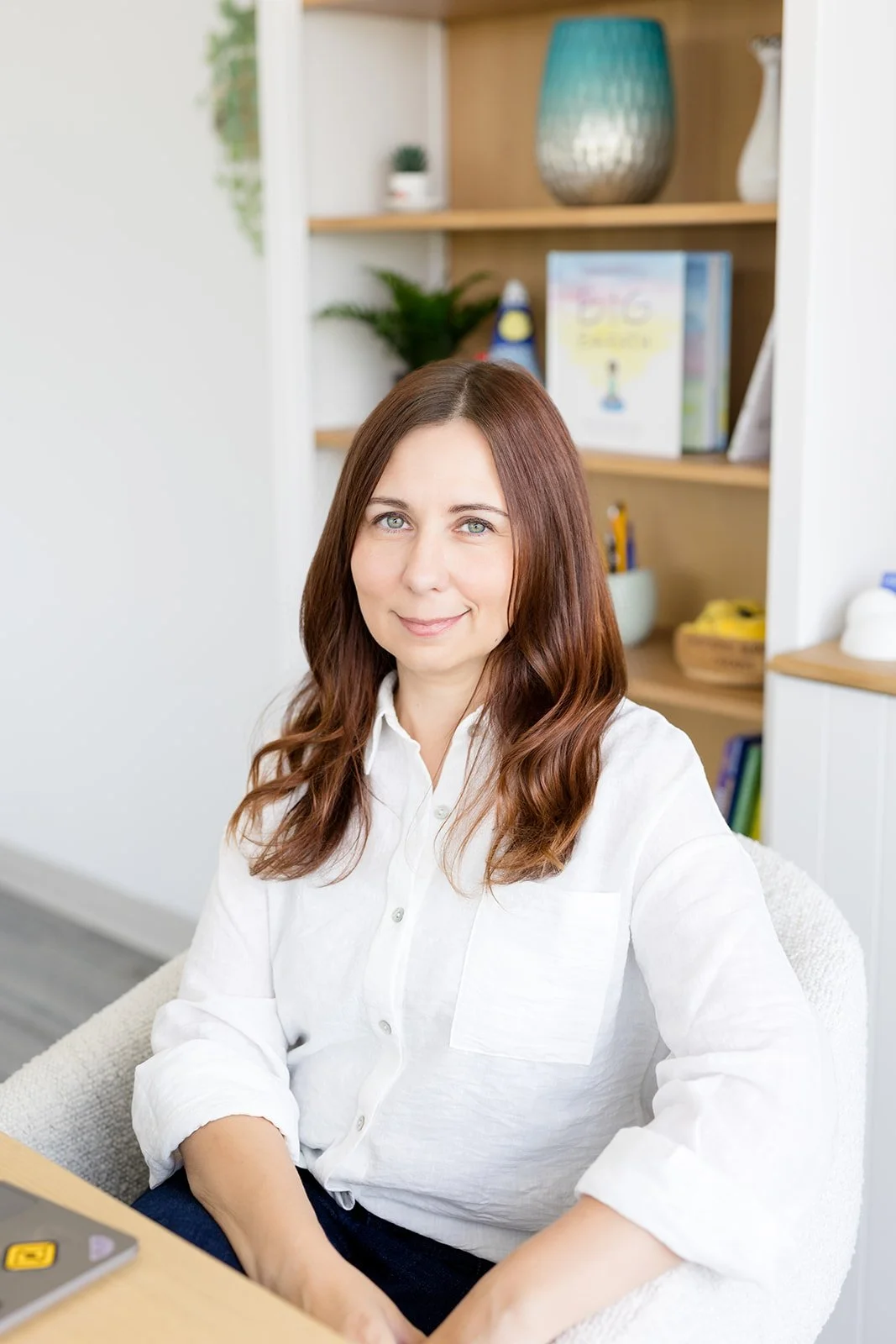
At Launch Psychology, Stephanie Laborge, M.Ed, R.Psych, is ERP-certified through the Behavior Therapy Training Institute (BTTI) and the International OCD Foundation (IOCDF), bringing specialized expertise that most therapists don't have.
Recognizing Childhood OCD
OCD (Obsessive-Compulsive Disorder) is more than just "being neat" or "worrying a lot." It's a specific anxiety disorder characterized by intrusive, unwanted thoughts (obsessions) and repetitive behaviors or mental acts (compulsions) that a child feels driven to perform.
COMMON OBSESSIONS IN CHILDREN:
Contamination Fears:
Fear of germs, dirt, or illness
Worry about getting sick or making others sick
Fear of touching "dirty" or "contaminated" objects
Harm Obsessions:
Intrusive thoughts about bad things happening to loved ones
Fear they might cause harm (even though they never would)
Excessive worry about safety
Symmetry & Ordering:
Need for things to be "just right"
Distress when objects aren't symmetrical or ordered
Feeling that something bad will happen if things aren't perfect
Moral/Religious Scrupulosity:
Excessive worry about being "bad" or sinful
Fear of having bad thoughts
Need for constant reassurance about moral decisions
"Pure-O" (Obsessions without visible compulsions):
Intrusive, disturbing thoughts
Mental rituals (counting, repeating phrases silently)
Often goes unrecognized because compulsions are hidden
COMMON COMPULSIONS IN CHILDREN:
Washing & Cleaning:
Excessive handwashing (until hands are raw)
Long showers or elaborate cleaning rituals
Avoiding touching things perceived as "dirty"
Checking:
Repeatedly checking locks, switches, homework
Asking parents to check things over and over
Need to ensure nothing bad will happen
Repeating & Redoing:
Repeating actions until they feel "right"
Redoing homework, rewriting, erasing repeatedly
Going in and out of doorways multiple times
Reassurance Seeking:
Constantly asking "Is this okay?" or "Am I safe?"
Need for parents to confirm things repeatedly
Can't move forward without reassurance
Avoidance:
Avoiding places, objects, or situations that trigger obsessions
School refusal due to OCD triggers
Restricting family activities

“If your child’s rituals, worries, or behaviors are taking more than 1 hour per day, interfering with school, friendships, or family life—or if you find yourself accommodating their rituals—it’s time to seek specialized help.”
Why ERP is the Gold-Standard Treatment for Childhood OCD
Research consistently shows that Exposure and Response Prevention (ERP) is the most effective treatment for OCD, with 70-80% of children showing significant improvement when ERP is delivered correctly by a properly trained therapist.
THE RESEARCH IS CLEAR:
✓ 70-80% Success Rate Multiple studies show that ERP leads to significant symptom reduction in the majority of children when delivered by ERP-trained clinicians.
✓ More Effective Than Medication Alone Research shows ERP is as effective or more effective than medication, with no side effects and longer-lasting results.
✓ Long-Term Benefits Children who complete ERP therapy maintain improvements years later, learning skills they can use for life.
✓ Backed by International OCD Foundation The International OCD Foundation, the leading authority on OCD treatment, identifies ERP as the first-line treatment for childhood OCD.

WHY DOESN'T GENERIC THERAPY WORK FOR OCD?
Traditional "Talk Therapy" Can Make OCD Worse:
Most therapists - even experienced child therapists - aren't trained in ERP. Without specialized training, well-meaning therapists often:
Provide reassurance (which reinforces the OCD cycle)
Focus on "understanding" the thoughts (which gives them more power)
Encourage avoidance (which strengthens the fear)
Use relaxation techniques (which don't address the core problem)
OCD is NOT general anxiety. It requires a specific, specialized approach.
Many families come to us after trying generic therapy for months or years without improvement.
They often say: 'We wish we had known about ERP sooner.'
You deserve specialized treatment from the start.
What is ERP Therapy?
HOW ERP WORKS:
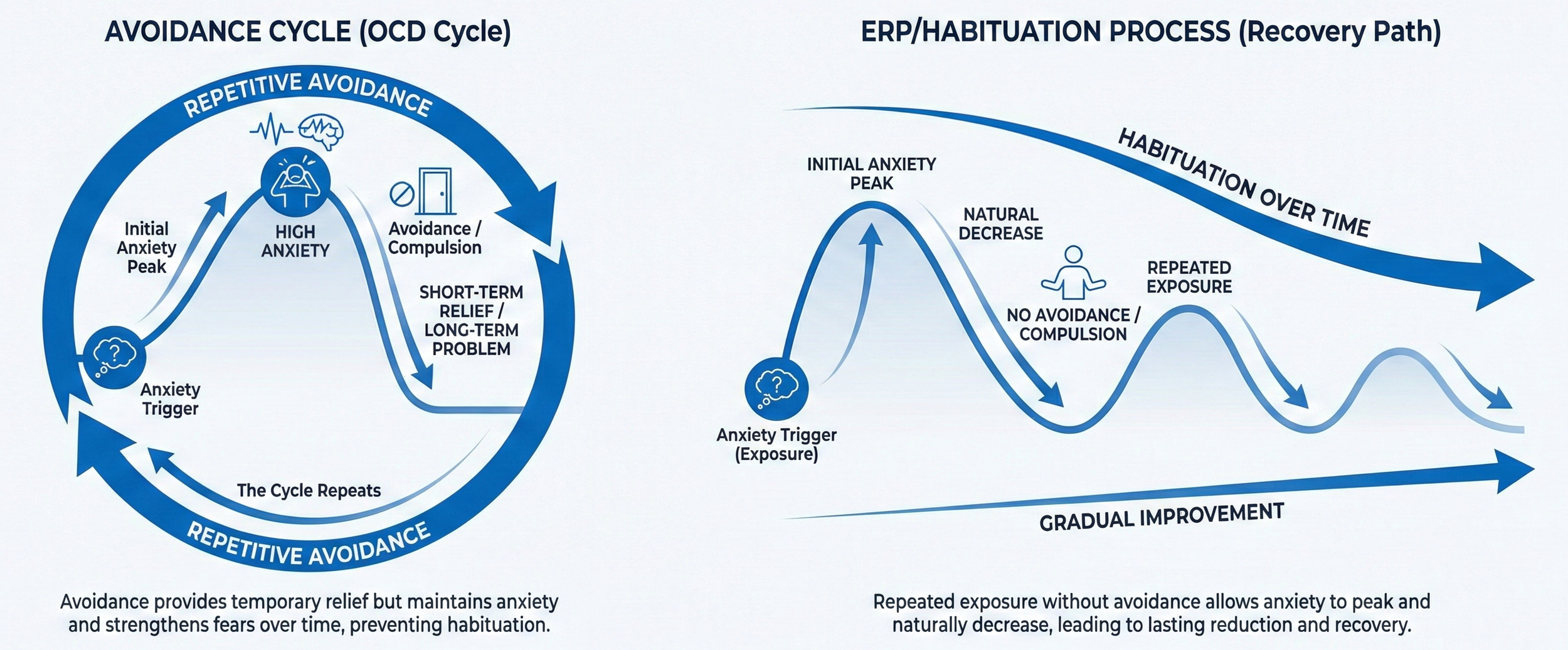
THE OCD CYCLE (What Keeps OCD Going):
Obsession → Intrusive, unwanted thought causes anxiety
Compulsion → Child performs ritual to reduce anxiety
Temporary Relief → Anxiety decreases briefly
Reinforcement → Brain learns: "I need the ritual to be safe"
Repeat → Cycle continues and worsens over time
ERP BREAKS THE CYCLE:
Exposure: Gradually and systematically facing feared situations, objects, or thoughts in a safe, controlled way. This is NOT "flooding" or forcing - it's collaborative, gradual, and empowering.
Response Prevention: Resisting the urge to perform compulsions or seek reassurance. This teaches the brain that the feared outcome won't happen and that anxiety decreases naturally without rituals.
ERP (Exposure and Response Prevention) is a specific type of Cognitive Behavioral Therapy designed to break the OCD cycle. It's structured, evidence-based, and surprisingly engaging for children when done correctly.
For Contamination Fears:
Touching "dirty" objects (starting with easier ones, building up)
Not washing hands immediately after
Gradually reducing handwashing rituals
For Checking Compulsions:
Checking homework only once
Not asking parents to re-check locks
Trusting that things are okay without checking
WHAT ERP LOOKS LIKE FOR CHILDREN:
For Symmetry/Ordering:
Leaving objects slightly "off"
Not redoing or fixing things
Tolerating the discomfort of imperfection
For Reassurance Seeking:
Parents learning to resist giving reassurance
Child learning to sit with uncertainty
Building confidence in their own judgment

"ERP doesn't eliminate anxiety - it teaches children that they can handle anxiety without rituals. The anxiety naturally decreases when the brain learns there's no real danger."

“Research shows that ERP has 70-80% success rates—but only when delivered correctly by properly trained clinicians. Stephanie’s specialized training ensures your child receives ERP the way it’s meant to be delivered.”
Specialized ERP Training Makes the Difference
THE PROBLEM: Most psychologists—even excellent child therapists—receive little to no training in ERP during their Master's or Doctoral programs. Without specialized training, well-meaning therapists can inadvertently reinforce OCD rather than treat it.
THE SOLUTION: Stephanie Laborge has completed advanced, specialized training in ERP through the top organizations in the field:
Why Stephanie's Certification Matters
STEPHANIE'S ERP CREDENTIALS:
✓ Behavior Therapy Training Institute (BTTI) Intensive training in ERP methodology specifically for OCD, taught by leading experts in the field.
✓ International OCD Foundation (IOCDF) Additional specialized training through the world's leading authority on OCD treatment and research.
✓ 10+ Years Treating Childhood OCD Extensive experience helping Calgary children overcome OCD using evidence-based ERP protocols.
✓ Registered Psychologist, College of Alberta Psychologists M.Ed, R.Psych #5210—ensuring the highest professional standards and accountability.
WHAT THIS MEANS FOR YOUR FAMILY:
When you work with Stephanie, you're working with a psychologist who:
Knows how to structure exposure hierarchies correctly
Understands how to prevent accommodations (parent behaviors that feed OCD)
Can distinguish OCD from general anxiety or other disorders
Follows evidence-based protocols proven to work
Collaborates with parents as essential partners in treatment
What to Expect: The ERP Journey
ERP is collaborative, structured, and surprisingly empowering for children. Here's exactly how the process works:
Free 10-Minute Consultation
Comprehensive Assessment
Parent Psychoeducation
Parents are essential partners in ERP. We teach you:
- How OCD works and why ERP is effective
- How to resist giving reassurance (even when it feels mean)
- How to support exposures at home
- How to recognize and reduce accommodations
- How to be your child's "coach" rather than OCD's helper
Building the Foundation
Before starting exposures, we:
- Build strong rapport with your child
- Teach them about their "OCD brain" (externalizing the disorder)
- Explain how exposures work (with metaphors, games, stories)
- Practice anxiety tolerance skills
- Start with easier exposures to build confidence
Systematic Exposures
Working through the exposure hierarchy, we:
- Start with moderately challenging exposures (not the scariest ones)
- Practice exposures in session
- Assign homework to practice between sessions
- Gradually work up to harder exposures
- Celebrate victories and learn from setbacks
- Adjust the plan as needed
For contamination OCD, a session might involve touching a doorknob, then sitting with the anxiety without washing hands, playing a game while anxiety decreases, then practicing at home.
Relapse Prevention & Maintenance
As symptoms decrease, we:
- Space out sessions (every 2 weeks, then monthly)
- Create a relapse prevention plan
- Teach your child to be their own therapist
- Prepare for "OCD flare-ups" (which are normal)
- Ensure the family knows how to maintain progress
"ERP is hard work—but it's empowering. Children often tell us they feel 'stronger' and 'braver' after learning they can face their fears. They're not just overcoming OCD—they're building confidence for life."
Your Questions About ERP, Answered
-
This is one of the most common concerns parents have, and it's completely understandable. The short answer is no—when done correctly, ERP does not traumatize children or make anxiety worse long-term.
Here's why:
Exposures are gradual and collaborative—we never force a child into their worst fear on day one
We start with moderately challenging exposures and build up slowly
Children have control and choice throughout the process
We teach anxiety tolerance skills before starting exposures
Anxiety naturally decreases during exposures as the brain learns there's no real danger
What actually traumatizes children: Years of OCD controlling their life, missing school, losing friendships, and family tension. ERP gives them freedom.
-
OCD gets worse when we avoid fears—avoidance teaches the brain that the fear is real and dangerous. ERP actually reduces anxiety over time by teaching the brain that the feared outcome doesn't happen.
Think of it like learning to swim: If a child is afraid of water, we don't throw them in the deep end. But we also don't keep them on dry land forever. We start in the shallow end, with support, and gradually build confidence. ERP works the same way.
The result: Most children feel less anxious overall after ERP because they're no longer constantly fighting OCD.
-
Resistance is normal, especially at first. That's why we:
Spend time building rapport before starting exposures
Explain ERP using age-appropriate language and metaphors
Let children have input on the exposure hierarchy
Use games, rewards, and playful approaches
Start with easier exposures to build confidence
Many children who initially resist become enthusiastic about ERP once they experience success. They start to see OCD as the "bad guy" they're defeating, not the therapy.
-
You'll know ERP is working when you see:
Reduced time spent on rituals
Fewer reassurance requests
Increased willingness to face feared situations
More flexibility and spontaneity
Improved mood and functioning at school/home
Progress isn't always linear—some weeks are better than others. But the overall trend should be improvement within 4-8 weeks.
-
ERP is a specific type of CBT designed specifically for OCD. Regular CBT for anxiety often focuses on:
Challenging anxious thoughts
Relaxation techniques
Coping skills
ERP focuses on:
Systematic exposure to fears
Preventing compulsions (response prevention)
Teaching the brain that feared outcomes don't happen
For OCD, ERP is essential—regular CBT often doesn't work and can sometimes make OCD worse by reinforcing reassurance-seeking.
-
Stephanie is a psychologist, not a physician, so she cannot prescribe medication. However, research shows:
ERP alone is often as effective as medication
ERP + medication can be helpful for severe OCD
ERP provides longer-lasting benefits than medication alone
ERP has no side effects
If medication is being considered, Stephanie can collaborate with your child's doctor or psychiatrist to ensure coordinated care.
-
OCD is a chronic condition, meaning it can wax and wane over time. However:
Children who complete ERP have significantly lower symptoms long-term
They learn skills they can use for life if OCD flares up
We create a relapse prevention plan before treatment ends
Brief "booster sessions" can help if symptoms return
Think of ERP like teaching your child to ride a bike—once they learn the skill, they have it forever, even if they need a refresher occasionally.
-
Very involved—and that's a good thing. Research shows that family involvement is one of the strongest predictors of ERP success.
You'll need to:
Attend parent sessions to learn about OCD and ERP
Support exposures at home between therapy sessions
Stop providing reassurance (even when it feels mean)
Reduce accommodations (ways you've adapted to OCD)
Be your child's coach and cheerleader
This is challenging but empowering. Parents often tell us they feel more confident and less helpless after learning how to respond to OCD effectively.
Timeline & Investment

WHAT TO EXPECT:
Typical Treatment Length: 12-16 weekly sessions for most children with mild to moderate OCD
Severe OCD may require:
20-25 sessions
More intensive treatment (twice weekly initially)
Longer timeline for complex cases
Mild OCD may improve in:
8-12 sessions
Faster progress with high family involvement

SESSION FEES:
Individual ERP Session: $240 per 50-minute session
Initial Assessment (1-2 sessions): $240 per session
Total Investment for Typical OCD Treatment:
12-16 sessions at $240/session = $2,880 - $3,840
WHAT YOU'RE INVESTING IN:
✓ Evidence-based treatment with 70-80% success rates
✓ Specialized ERP training you won't find with most therapists
✓ Reduced OCD symptoms that improve quality of life
✓ Skills your child can use for life
✓ Freedom from rituals, avoidance, and constant worry
✓ Improved family functioning and reduced stress
✓ Preventing years of OCD controlling your child's life

INSURANCE COVERAGE:
Direct Billing Available: We offer direct billing for most major insurance plans in Alberta, including:
Alberta Blue Cross
Green Shield
Manulife
Sun Life
And many more
Important: Check your plan's annual maximum for psychology services. Most extended health plans cover services provided by a Registered Psychologist.
Many families tell us: 'We wish we had done ERP sooner.'
The cost of NOT treating OCD - missed school, lost friendships, family stress - far outweighs the investment in specialized treatment.
AVAILABILITY NOTE:
Due to the specialized nature of ERP therapy and Stephanie's commitment to providing the highest quality treatment, there may be a brief waitlist for new ERP clients.
Why the waitlist exists:
Stephanie is one of the few ERP-certified psychologists in Calgary
Quality ERP requires proper time and attention per client
High demand for specialized OCD treatment
Worth the wait: Families consistently tell us that accessing properly delivered ERP therapy—even with a brief wait—is far better than months or years of generic therapy that doesn't work.
We encourage you to book your free consultation now to discuss your needs and get on the schedule.

Ready to Help Your Child Overcome OCD?
Book a free 10-minute consultation to discuss your child's OCD and learn how ERP therapy can help. No pressure—just clarity about whether ERP is the right approach for your family.
Option 1:
BOOK ONLINE
Option 2:
CALL US 📞 (403) 889-5419
Option 3:
EMAIL US ✉️ info@launchpsychology.com
YOU'RE NOT ALONE:
If your child is struggling with OCD, you're not alone—and there is hope. ERP therapy has helped thousands of children overcome OCD and reclaim their lives.
Stephanie Laborge has specialized training in ERP and has helped Calgary families for over 10 years. Your child deserves expert care.

OFFICE LOCATION: Launch Psychology
Suite 277, 200 Rivercrest Drive SE
Calgary, AB T2C 2Z1
VIRTUAL SESSIONS: ERP therapy sessions are available via secure video anywhere in Alberta.
OFFICE HOURS: Monday - Friday: 9:00 AM - 7:00 PM
Saturday: 10:00 AM - 4:00 PM
Sunday: 10:00 AM - 4:00 PM
Extended hours available by appointment