

CBT for Childhood Anxiety
Evidence-based Cognitive Behavioural Therapy to help anxious children and teens worry less, face their fears, and build confidence.
If your child struggles with worry, fears, or anxiety that interferes with daily life, Cognitive Behavioural Therapy (CBT) can help. CBT is a proven, practical approach that teaches children and teens the skills to manage anxious thoughts, face fears gradually, and build lasting confidence.
What is Cognitive Behavioural Therapy (CBT)?
CBT is a structured, evidence-based therapy that helps children and teens understand the connection between their thoughts, feelings, and behaviours. It's the most researched and proven approach for treating childhood anxiety.
HOW CBT IS DIFFERENT
CBT is active and skills-based:
Unlike traditional talk therapy, CBT doesn't just explore feelings. It teaches practical skills that children can use immediately to manage anxiety. Your child will learn specific strategies and practice them both in sessions and at home.
CBT focuses on the present:
Rather than spending time analyzing the past, CBT focuses on current thoughts and behaviours. We work on what's happening right now and what your child can do differently moving forward.
CBT is goal-oriented:
Each session has a clear purpose. We set specific, measurable goals and track progress systematically. You'll see concrete improvements in your child's ability to manage anxiety.
CBT is time-limited:
Most children see significant improvement within 8-16 sessions. CBT provides tools your child can use for life, not ongoing dependency on therapy.

THE EVIDENCE FOR CBT
Research-backed effectiveness:
CBT is the gold-standard treatment for childhood anxiety disorders. Decades of research show that 60-80% of anxious children significantly improve with CBT.
What studies show:
Reduction in anxiety symptoms that lasts after treatment ends
Improved daily functioning at school, home, and with peers
Better coping skills that children use throughout adolescence
Lower risk of anxiety persisting into adulthood
CBT works because it changes how the brain responds to anxiety. Children literally rewire their anxious thought patterns through practice and repetition.

WHO PROVIDES CBT AT LAUNCH PSYCHOLOGY
Stephanie Laborge, M.Ed, R.Psych (#5210) Registered Psychologist specializing in evidence-based treatments for childhood anxiety and OCD. Over 10 years of experience helping anxious children and teens build confidence and resilience.
Supervised team members trained in CBT approaches Our team receives ongoing training and supervision in CBT for childhood anxiety, ensuring consistent, high-quality care.
Anxiety Disorders CBT Can Help
-
![]()
GENERALIZED ANXIETY DISORDER (GAD)
What it looks like:
Excessive worry about many things (school, health, family, the future)
Difficulty controlling worry
Physical symptoms (stomachaches, headaches, tension)
Constant "what if" thinking
Difficulty concentrating due to worry
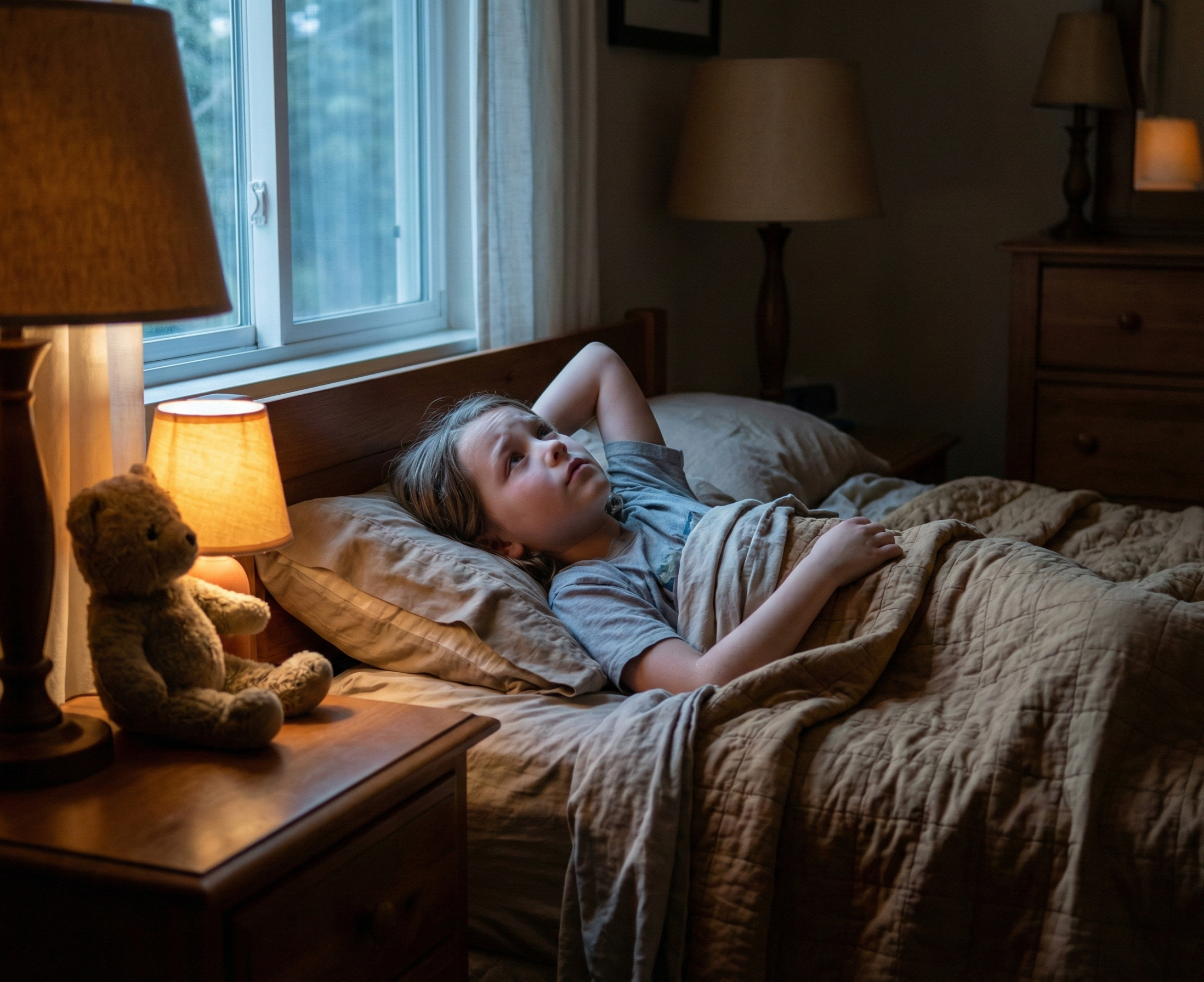
Sleep problems from racing thoughts
How CBT helps: Teaches children to identify worry thoughts, evaluate how realistic they are, and develop more balanced thinking patterns. Includes worry time scheduling and relaxation strategies.
-
![]()
SOCIAL ANXIETY
What it looks like:
Intense fear of social situations or performance
Avoiding social interactions with peers
Fear of judgment, embarrassment, or humiliation
Difficulty speaking up in class or joining groups
Physical symptoms (blushing, sweating, shaking)
Extreme self-consciousness
How CBT helps: Gradual exposure to social situations combined with changing thoughts about being judged. Builds social confidence through step-by-step practice in safe, supportive ways.
-
![]()
SEPARATION ANXIETY
What it looks like:
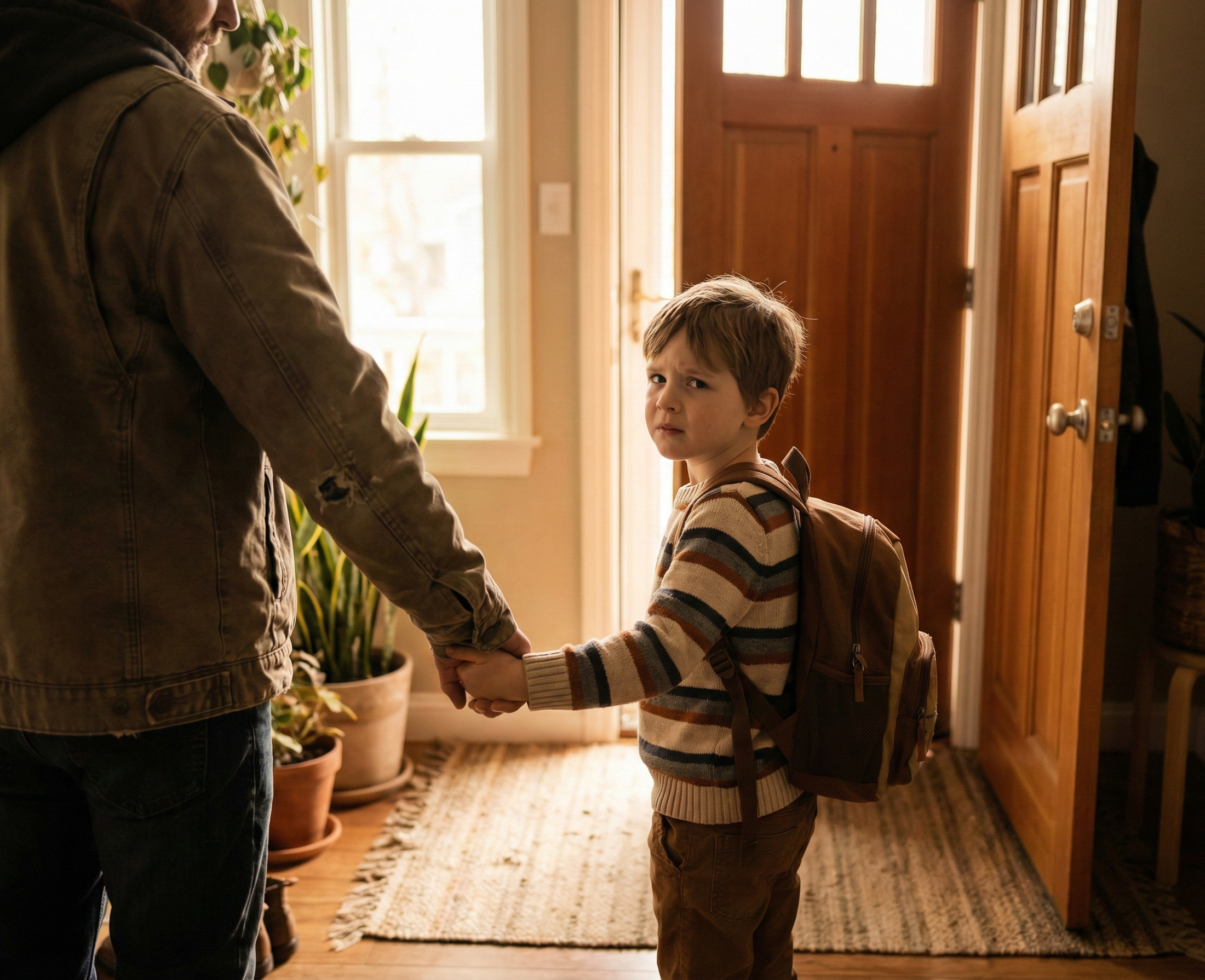
Excessive distress when separated from parents/caregivers
Worry about harm coming to parents or self when apart
Refusal to go to school, sleepovers, or activities alone
Difficulty sleeping alone
Physical complaints to avoid separation
Clinginess and following parents constantly
How CBT helps: Gradual practice with separations, starting small and building up. Teaches children coping strategies and challenges catastrophic thoughts about separation.
-
![]()
SPECIFIC PHOBIAS
What it looks like:
Intense fear of specific objects or situations (dogs, insects, needles, vomiting, the dark, storms, etc.)
Avoidance of feared object/situation
Immediate panic or distress when encountering fear
Recognition that fear is excessive (in older children)
Interference with normal activities
How CBT helps: Systematic desensitization and gradual exposure. Children learn to face fears in small, manageable steps while using anxiety management techniques.
-
![]()
SCHOOL ANXIETY/REFUSAL
What it looks like:
Difficulty going to or staying at school
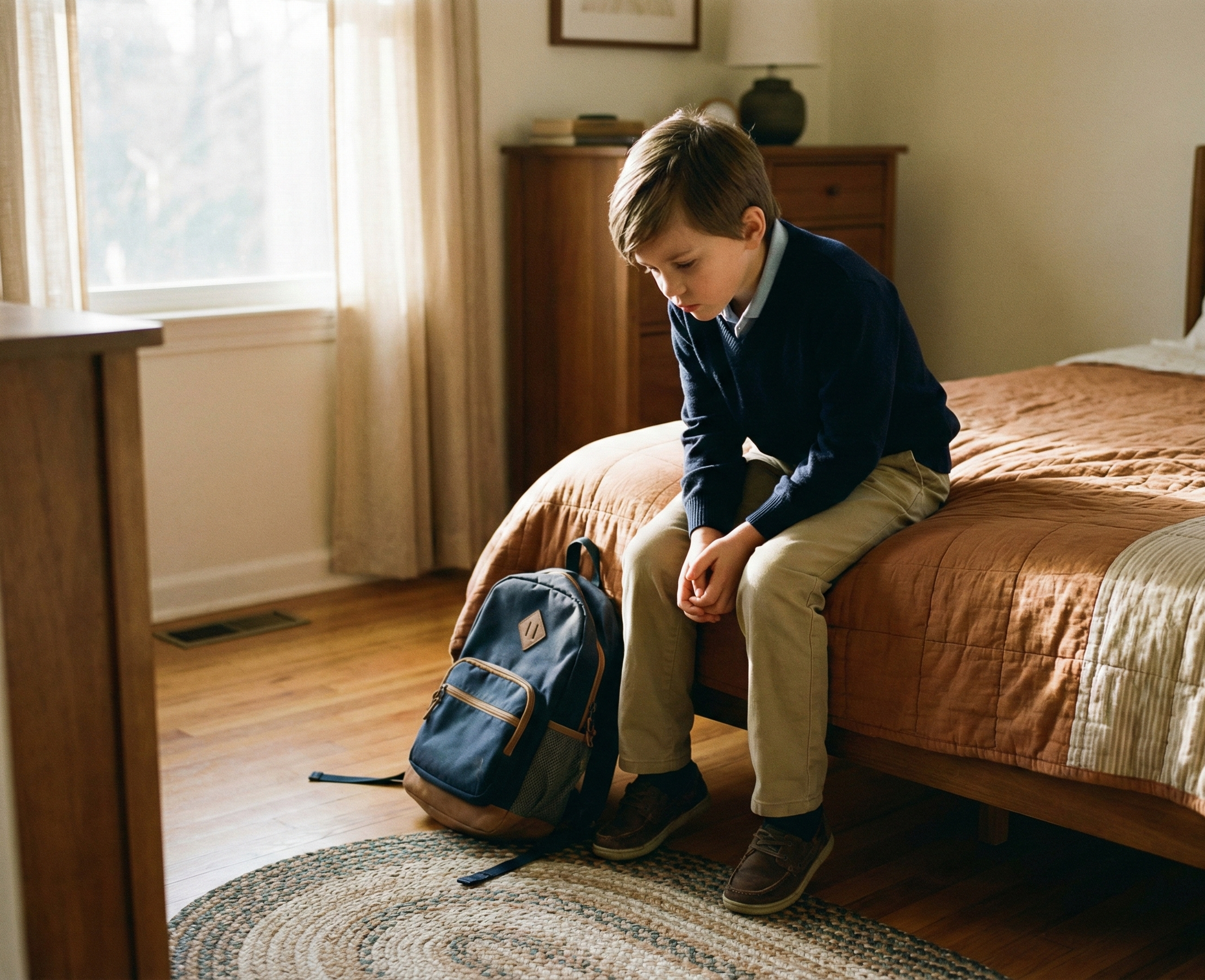
Physical complaints on school mornings (stomachaches, headaches)
Panic or meltdowns about attending school
Worry about academic performance or social situations
Avoidance of specific school activities or transitions
Frequent requests to call parents or leave early
How CBT helps: Identifies specific school-related worries and creates a gradual return-to-school plan. Teaches coping skills for managing anxiety during the school day.
-
![]()
PERFORMANCE ANXIETY
What it looks like:
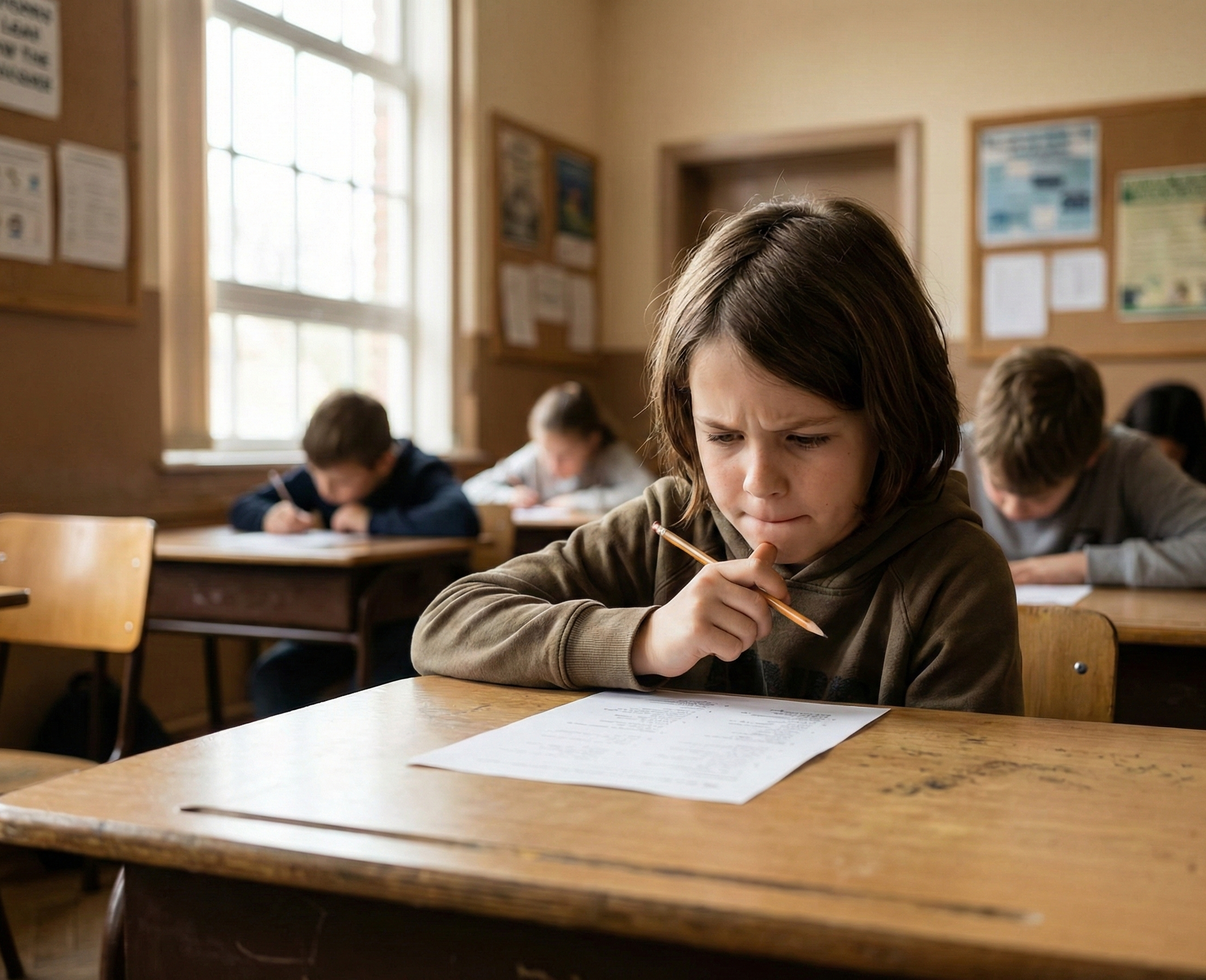
Fear of tests, presentations, or performing in front of others
Excessive preparation or avoidance of performance situations
Physical symptoms before tests or performances
Negative thoughts about ability or outcome
Difficulty with perfectionism
How CBT helps: Addresses perfectionism and fear of failure, practices performance situations gradually, and teaches anxiety management during high-pressure moments.


How CBT Works: The Thought-Feeling-Behaviour Connection
CBT is based on a simple but powerful idea: our thoughts, feelings, and behaviours are all connected. When we change one, the others change too.
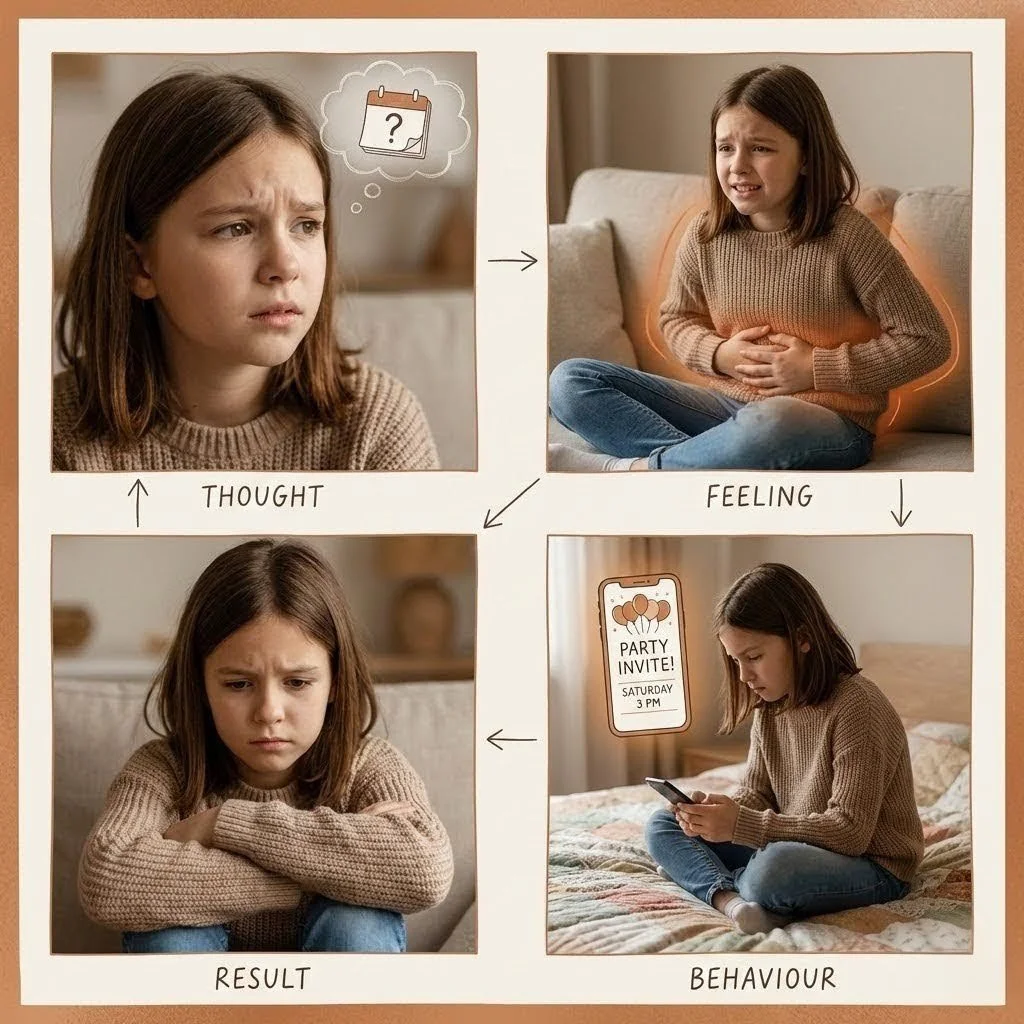
HOW CBT BREAKS THE CYCLE
CBT teaches children to:
1. Identify anxious thoughts
"What am I telling myself? What do I think will happen?"
2. Challenge anxious thoughts
"Is this thought realistic? What's the evidence? What's more likely to happen?"
3. Develop balanced thinking
"Even if it's uncomfortable, I can handle it. Most people won't notice or care."
4. Face fears gradually
"I'll go to the party for 30 minutes. I can leave if I need to, but I'll try."
5. Build confidence through experience
"I went and it was okay. I didn't embarrass myself. I can do this again."

THE ANXIETY CYCLE
Anxious children get stuck in a cycle:
ANXIOUS THOUGHT
↓
ANXIOUS FEELING
↓
AVOIDANCE BEHAVIOUR
↓
CONFIRMS ANXIOUS THOUGHT
(cycle repeats)
Example:
Thought: "If I go to the party, I'll embarrass myself and everyone will laugh at me"
Feeling: Intense anxiety, fear, dread
Behaviour: Avoids party, stays home
Result: Never learns that the feared outcome wouldn't happen, anxiety gets stronger
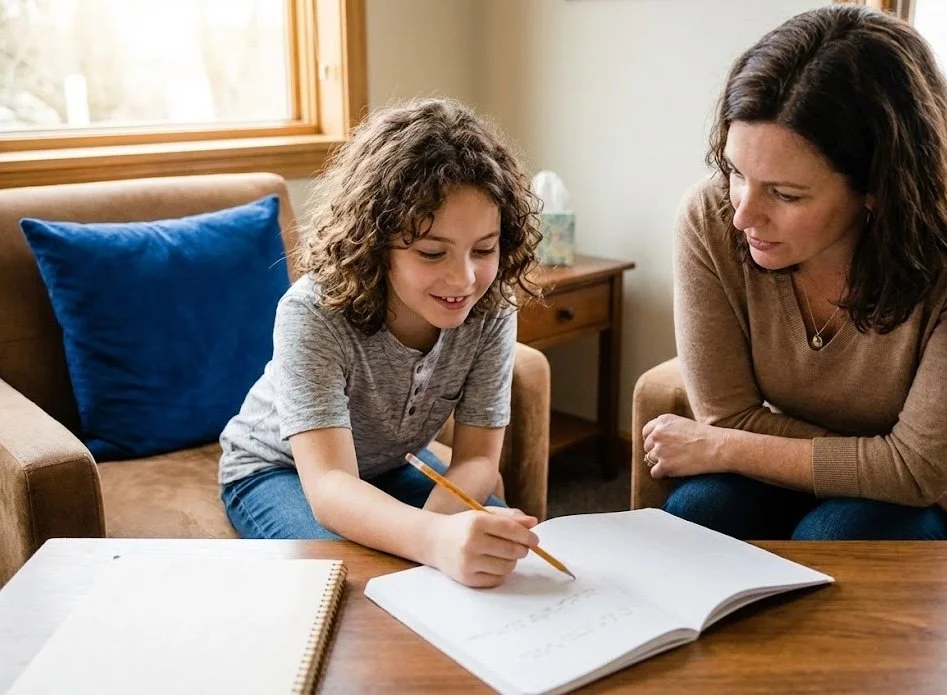
KEY CBT SKILLS CHILDREN LEARN
Cognitive Skills (Thinking):
Identifying anxious thoughts
Examining evidence for and against worries
Developing more realistic, balanced thoughts
Recognizing thinking traps (catastrophizing, mind reading, etc.)
Behavioural Skills (Actions):
Gradual exposure to feared situations
Reducing avoidance and safety behaviours
Trying new coping behaviours
Building confidence through practice
Emotional Regulation Skills (Feelings):
Deep breathing and relaxation techniques
Mindfulness and grounding exercises
Tolerating uncomfortable feelings
Understanding that anxiety decreases on its own if you don't avoid
Problem-Solving Skills:
Breaking big problems into smaller steps
Generating solutions to worries
Planning and preparing for difficult situations
Building coping ahead plans
What to Expect in CBT for Childhood Anxiety
CBT is structured and goal-oriented. Here's what the process typically looks like.
What to Expect: CBT for Childhood Anxiety
Cognitive Behavioural Therapy (CBT) is a structured, evidence-based approach that teaches children practical skills to manage anxiety. Here's how treatment typically unfolds.
Assessment & Goal Setting
- Understand your child's specific anxiety symptoms
- Identify situations that trigger anxiety
- Discuss how anxiety impacts daily life
- Set clear, achievable goals for treatment
- Explain CBT to your child in age-appropriate ways
- How anxiety works in the brain and body
- The connection between thoughts, feelings, and behaviours
- Why avoidance makes anxiety stronger
- That CBT will help them feel more in control
Skills Building & Practice
- Review of homework/practice from previous week
- Teaching a new CBT skill or strategy
- In-session practice of the skill
- Planning how to practice the skill at home
- Gradual exposure to feared situations (when appropriate)
- Identifying and challenging anxious thoughts
- Using relaxation and breathing techniques
- Facing fears in small, manageable steps (exposure)
- Problem-solving and coping planning
- Building confidence through repeated practice
- You'll attend part of each session for updates
- We'll teach you how to support your child's practice at home
- We'll help you reduce accommodation (ways you might be unintentionally reinforcing anxiety)
- You'll learn when to encourage your child to face fears vs. when to provide comfort
Consolidation & Relapse Prevention
- Reviewing progress and celebrating successes
- Practising skills independently
- Planning for future challenges
- Creating a "toolbox" of strategies your child can use
- Discussing when to return if anxiety increases in the future
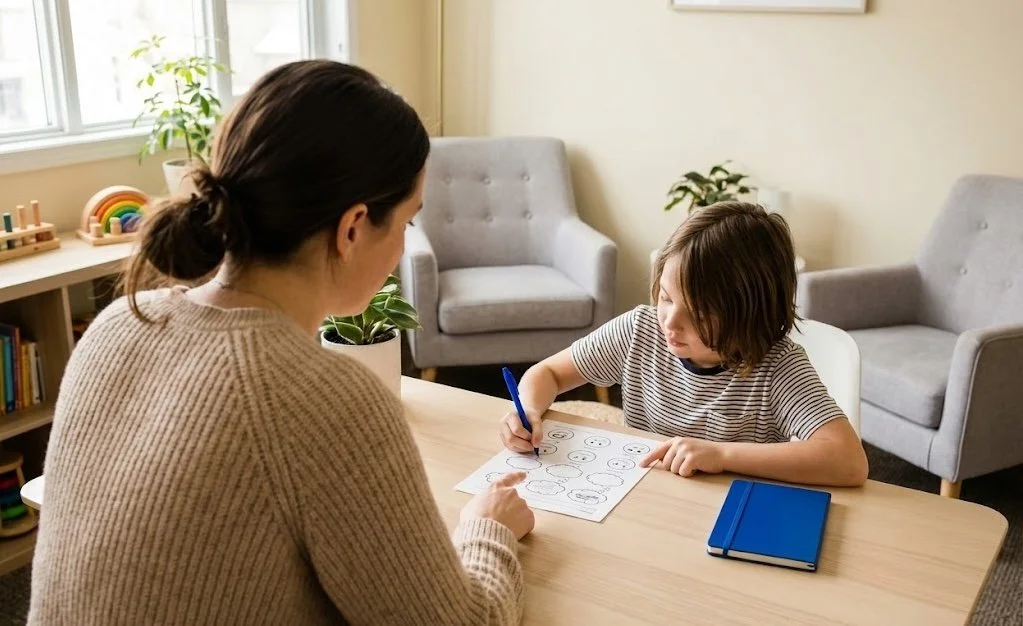
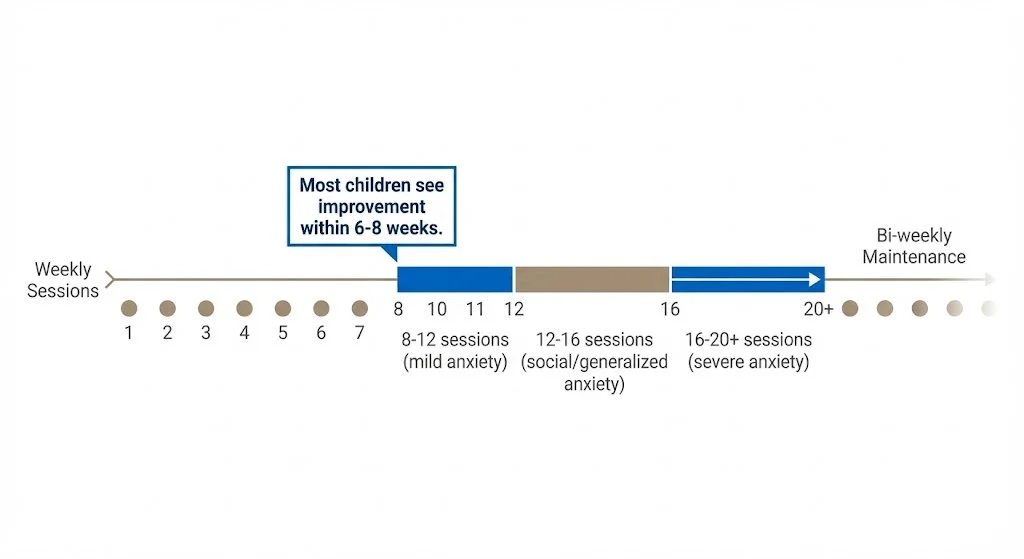
HOW LONG DOES CBT TAKE?
Typical timeline:
8-12 sessions: For specific phobias or mild-moderate anxiety
12-16 sessions: For social anxiety or generalized anxiety
16-20+ sessions: For severe anxiety or multiple anxiety disorders
HOMEWORK IS ESSENTIAL
CBT requires practice between sessions:
Your child will have homework each week, which might include:
Tracking anxious thoughts using a worksheet
Practicing relaxation exercises daily
Facing a small fear and recording what happens
Trying a new coping strategy
Challenging worry thoughts with evidence
The more your child practices, the faster they improve. Progress happens between sessions, not just during them.
Frequency:
Usually weekly sessions for consistency
Bi-weekly sessions during maintenance phase
Follow-up sessions as needed
Most children see noticeable improvement within 6-8 weeks of starting CBT.
Is CBT the Right Approach for Your Child?

CBT is highly effective for childhood anxiety, but it's not the only option. Here's when CBT is the best choice, and when other approaches might be more appropriate.
General anxiety and worry:
If your child worries excessively about school, health, family, or the future, CBT is the gold-standard treatment.
Social anxiety:
CBT with gradual exposure is the most effective treatment for fear of social situations.
Specific phobias:
CBT with systematic desensitization effectively treats fears of dogs, needles, the dark, storms, etc.
School anxiety:
CBT helps children return to school and manage performance anxiety.
Perfectionism and performance anxiety:
CBT addresses the thoughts that fuel excessive worry about mistakes or failure.
CBT IS BEST FOR:
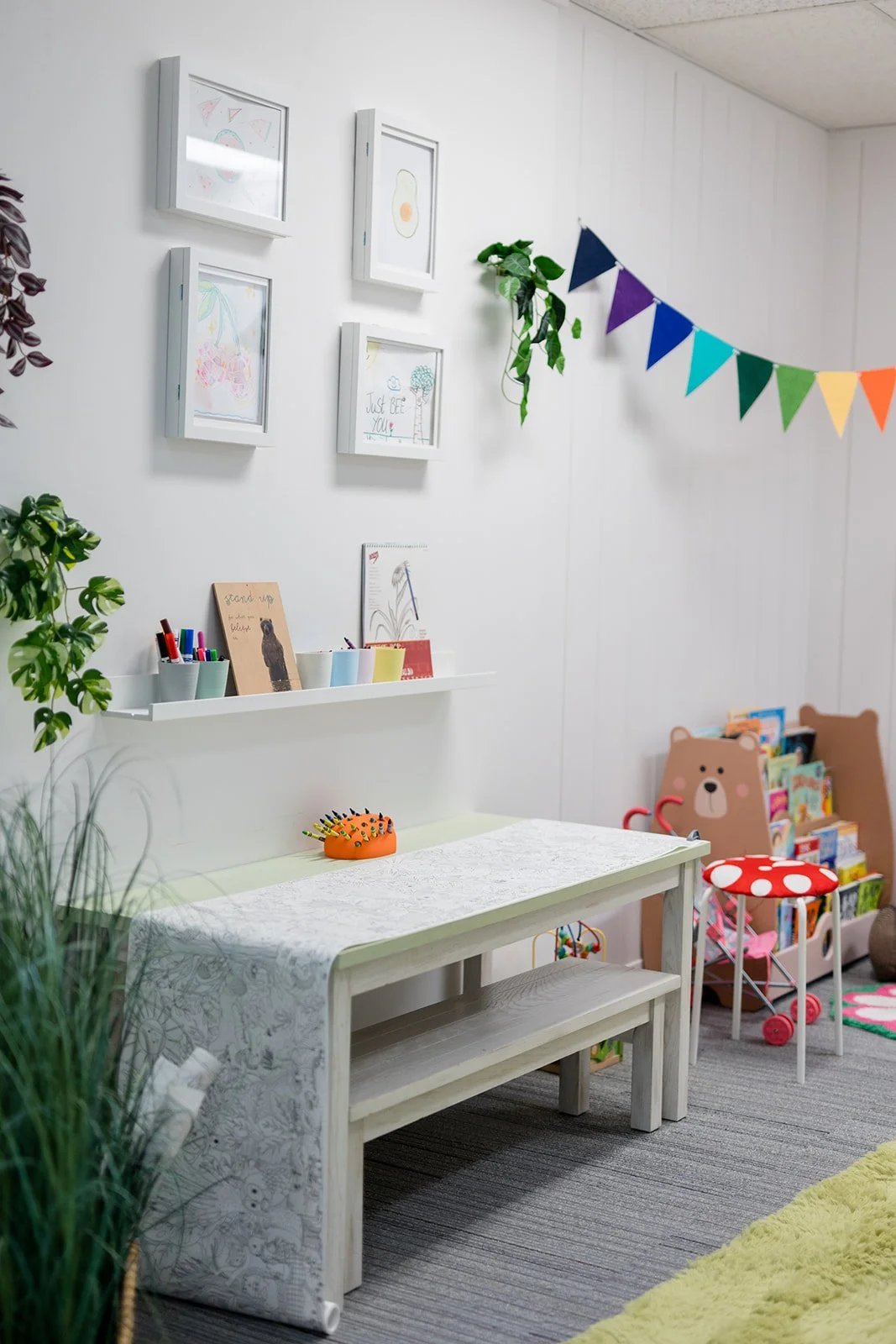

Not sure which approach is right? Book a free 10-minute consultation. We'll discuss your child's symptoms and recommend the most effective treatment, whether that's CBT, ERP, EMDR, or a comprehensive assessment to clarify the diagnosis first.
WHEN OTHER APPROACHES ARE BETTER:
For OCD (Obsessive-Compulsive Disorder):
Use ERP (Exposure and Response Prevention), a specialized form of CBT specifically for OCD. Standard CBT doesn't treat OCD effectively.
→ Learn more about ERP therapy for childhood OCD
For trauma or PTSD:
Use EMDR (Eye Movement Desensitization and Reprocessing) for trauma processing. While CBT can help, EMDR is often more effective for trauma-specific symptoms.
→ Learn more about EMDR therapy for teens
For very young children (under 6):
Play therapy or parent coaching may be more appropriate. Young children often don't have the cognitive development needed for CBT's thinking-based strategies.
For anxiety related to autism or ADHD:
CBT can be adapted, but treatment should address the underlying neurodevelopmental condition first. Comprehensive assessment may be needed.
CAN CBT BE COMBINED WITH OTHER TREATMENTS?
Yes, CBT often works well alongside:
Medication:
For severe anxiety, CBT combined with medication (prescribed by a psychiatrist) can be more effective than either alone.
School accommodations:
CBT works best when your child also has appropriate support at school (if anxiety affects academic performance).
Parent support:
Parent training in how to support (not accommodate) anxiety often enhances CBT's effectiveness.
Your Questions About CBT for Childhood Anxiety, Answered
-
CBT is most effective for children ages 7 and up, as it requires the ability to identify thoughts and understand the connection between thinking and feeling. For children ages 6-7, we assess readiness on a case-by-case basis. For younger children (under 6), play therapy or parent coaching is usually more appropriate.
-
CBT is action-oriented, not just talk therapy. While we do discuss feelings, the focus is on practicing new skills and behaviours. Children spend more time learning strategies and doing exercises than just talking about emotions. This makes CBT less overwhelming for children who struggle to verbalize feelings.
-
Homework resistance is common, especially at first. We work with you to make assignments manageable and age-appropriate. We also problem-solve barriers (too hard, too boring, too scary) and adjust homework accordingly. Progress is slower without practice, so we'll work together to find strategies that help your child complete assignments.
-
You'll notice gradual changes: your child facing situations they previously avoided, worrying less frequently, using coping strategies independently, and improved daily functioning. We track progress systematically using rating scales and goal review. Most parents notice improvement within 6-8 weeks.
-
CBT is structured with specific techniques, homework, and measurable goals. Regular counselling often focuses more on exploring feelings and building insight. CBT is time-limited (typically 8-16 sessions) while traditional counselling may be open-ended. CBT has the strongest research evidence for treating childhood anxiety.
-
No. CBT's goal is to teach skills your child can use independently. Once your child learns the strategies, they have them for life. We intentionally work toward ending therapy by building independence. Most children don't need ongoing weekly therapy after completing CBT.
-
When children start facing fears (exposure), anxiety may temporarily increase. This is expected and actually necessary for CBT to work. We go gradually and ensure your child has coping skills before exposure begins. The temporary discomfort leads to long-term improvement.
-
If progress stalls, we reassess. Sometimes the diagnosis is different (e.g., OCD requiring ERP instead of CBT, or trauma requiring EMDR). Sometimes medication needs to be considered. Sometimes external factors (school problems, family stress) need to be addressed first. We'll work together to determine the best path forward.
-
Yes! Parent involvement is essential. You'll attend part of each session for updates and guidance. We teach you how to support your child's practice at home without accidentally reinforcing anxiety. Research shows CBT is most effective when parents are actively involved.
-
CBT doesn't dismiss anxiety or tell children to "just stop worrying." Instead, it teaches concrete skills for managing anxious thoughts and behaviours. Children learn to identify specific worry patterns, evaluate evidence, develop coping strategies, and face fears gradually with support. It's active skill-building, not dismissing feelings.
Investment in Your Child's Wellbeing
PAYMENT OPTIONS:
Flexible payment:
Pay per session as you go
Payment plans available (discuss during consultation)
Credit card, debit, or e-transfer accepted
Receipts provided for tax purposes (medical expense deduction)

CBT SESSION FEES:
50-60 Minute Individual Session: $240
Typical treatment: 8-16 sessions for most childhood anxiety disorders
Estimated total investment: $1,920 to $3,840 (most families: $2,400 to $3,200)
WHAT YOU'RE INVESTING IN
Evidence-based treatment:
Decades of research supporting CBT for childhood anxiety
60-80% of children significantly improve
Skills that last a lifetime
Long-term benefits:
Reduced anxiety symptoms
Improved school performance and attendance
Better peer relationships
Prevention of anxiety persisting into adulthood
Your child's confidence and independence
Peace of mind for your family

INSURANCE COVERAGE:
Most extended health plans in Alberta cover psychological services, including CBT provided by Registered Psychologists.
We offer direct billing for most major insurance companies:
Alberta Blue Cross
Green Shield Canada
Sun Life
And many more
How it works: We bill your insurance directly and you pay only your portion (co-pay or deductible).
The earlier anxiety is treated, the better the outcomes. Childhood anxiety left untreated often worsens over time and can lead to depression, substance use, or chronic anxiety in adulthood. Investing in CBT now prevents bigger problems later.

Ready to Help Your Child Worry Less?
If your child struggles with anxiety that interferes with school, friendships, or daily life, CBT can help. Book a free 10-minute consultation to discuss your child's specific concerns and learn whether CBT is the right approach.
No pressure, just clarity about the best path forward for your family.
Option 1:
BOOK ONLINE
Option 2:
CALL US 📞 (403) 889-5419
Option 3:
EMAIL US ✉️ info@launchpsychology.com

OFFICE LOCATION: Launch Psychology
Suite 277, 200 Rivercrest Drive SE
Calgary, AB T2C 2Z1
OFFICE HOURS: Monday - Friday: 9:00 AM - 7:00 PM
Saturday: 10:00 AM - 4:00 PM
Sunday: 10:00 AM - 4:00 PM
Extended hours available by appointment